
Play Interventions for Children
Play-based therapeutic intervention for children from around undefined years of age - a child-centred, trauma-informed way of working with what…
Read more
Therapeutic support for children and adults living with the effects of trauma - built on safety, choice and pace rather than on retelling what happened.
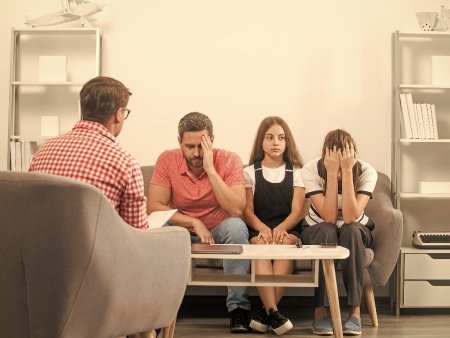
“Trauma-informed” has become a phrase that appears on almost every service website in Australia, usually without any explanation of what it changes in practice. It should change a great deal.
Trauma-informed counselling starts from a different question. Not what is wrong with this person, but what has happened to them, and what is their behaviour doing for them. A child who explodes at the smallest correction, an adult who cannot sit with their back to a door, a young person who disappears the moment a conversation gets close — these are usually adaptations, not defects.
Nothing therapeutic happens in a nervous system that is braced. The first work is always a predictable frame, a steady practitioner and a person who knows what will and will not happen in the room.
You do not have to tell us what happened in order for us to help. Retelling an event in detail is not a prerequisite for therapy, and forced disclosure can do harm.
Trauma removes control. Therapy should not repeat that. You decide the pace, what is discussed, what is left, and when to stop.
Particularly with children. Before asking a child to change a behaviour, we work out what the behaviour is protecting them from.
Housing, income, immigration status, culture, disability, ongoing safety concerns. Therapy delivered as if none of that exists rarely holds.
Trauma shows up differently in children. Adults often describe intrusive memories and avoidance. Children more often show regression, sleep disruption, aggression, clinginess, stomach aches, school refusal or a flat withdrawal that gets mistaken for “being fine”. This is why our work with children is delivered through play interventions rather than through talking alone.
If you or a child is in immediate danger, call 000. For 24/7 support contact Lifeline on 13 11 14, Kids Helpline on 1800 55 1800, 1800RESPECT on 1800 737 732, or Safe Steps on 1800 015 188. Our counselling service is not a crisis or after-hours service.
What counts as trauma, how it is spoken about, and whether it can be spoken about at all is shaped by culture. We work with families from a wide range of cultural and language backgrounds, including African and CALD communities, and with families whose trauma includes displacement, migration and settlement. We do not assume a Western therapeutic frame is automatically the right one, and we will say so when a community, faith or family-based response would serve you better alongside what we offer.
No. Trauma-informed practice explicitly does not require disclosure. Plenty of useful work happens without an event ever being described in detail, and that is especially true for children.
Longer than a short course of general counselling, usually. Single incidents in an otherwise stable life can resolve relatively quickly. Trauma that is ongoing, repeated or from early childhood takes time, and we would rather tell you that at the start.
Possibly. Young children can carry the physiological and relational effects of events they have no narrative memory of. If their behaviour, sleep or relationships changed and have not recovered, it is worth a conversation.
Yes, and we usually recommend it. A regulated, supported parent is the single largest factor in a child’s recovery.
No — that is a separate Medicare pathway to a registered psychologist or other eligible provider. We are a community-based social work counselling service. If a GP mental health care plan is the better route for you, we will tell you.
No. We are not a crisis service. For urgent situations please use the numbers above, and call 000 if anyone is in immediate danger.
Most people we work with combine two or three of these. Mix and match whatever fits your plan.
Play-based therapeutic intervention for children from around undefined years of age - a child-centred, trauma-informed way of working with what…
Read more
Counselling for children, young people, parents and whole families - developmentally appropriate for the child, practical for the adults, and…
Read more
Therapeutic support for children and adults affected by family violence - recovery-focused counselling for children, and practical, safety-aware support for…
Read moreTell us what you need and we will walk you through the options — no obligation, no pressure, and a real person on the other end.